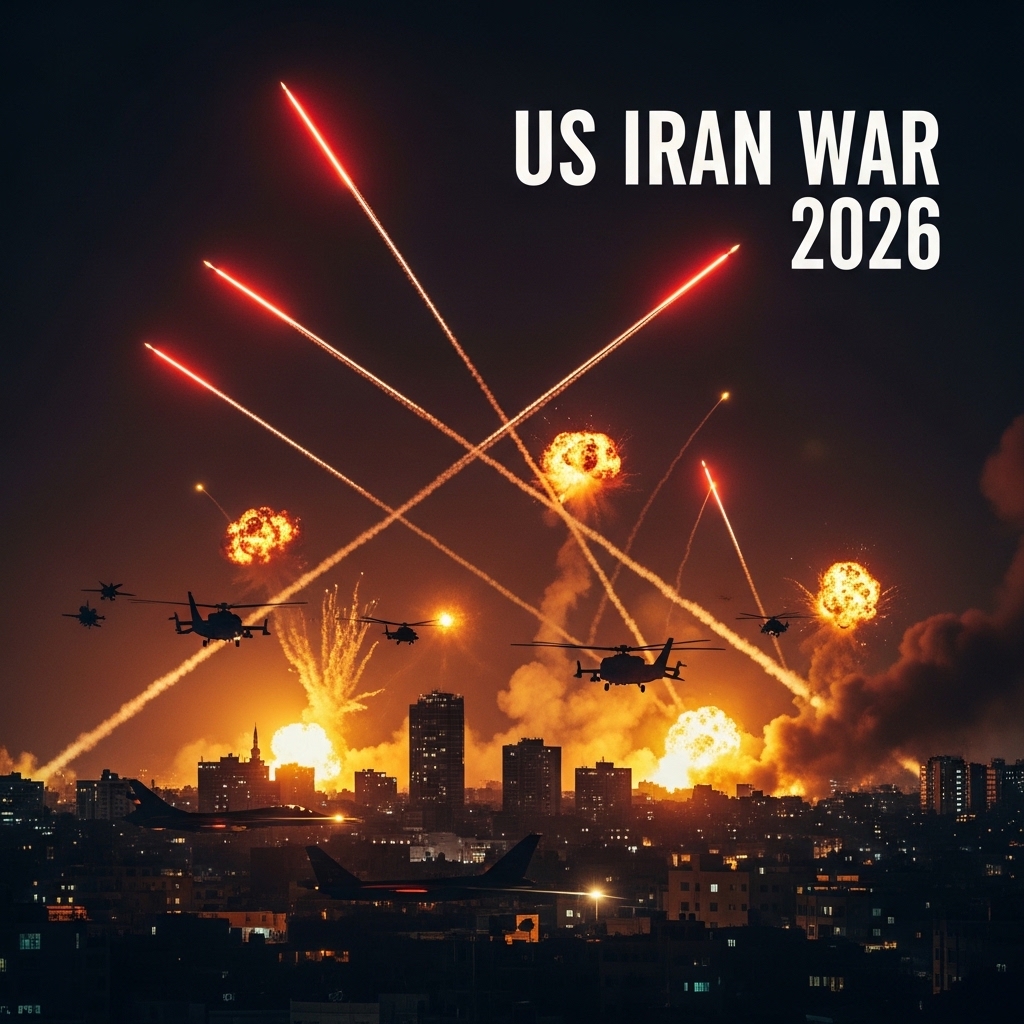
What Is the US Iran War? The Short Version
On February 28, 2026, the United States military and the Israeli Defense Forces launched a coordinated series of strikes against Iran. The operation targeted Iran's nuclear facilities, missile production sites, military command centers, and the country's top leadership including Supreme Leader Ayatollah Ali Khamenei, who was killed in the initial wave of strikes.
As of March 4, 2026, the conflict is in its fourth day and shows no signs of slowing down. Iran has retaliated by firing missiles and drones at Israel and across the Persian Gulf, hitting military bases, airports, and civilian areas in at least seven countries. The war has already disrupted global oil markets, closed major airports, and forced the evacuation of thousands of civilians across the Middle East.
Why Is There Conflict Between the US and Iran?
This is not a conflict that started in 2026. The tension between the United States and Iran stretches back decades all the way to 1979, when the Islamic Revolution overthrew the US-backed Shah and American embassy staff were taken hostage for 444 days.
But the specific trigger for the 2026 war came from three issues that had been building for months:
1. Iran's Nuclear Program
During his State of the Union address on February 24, 2026, President Donald Trump publicly accused Iran of reviving efforts to build nuclear weapons. He called Iran's ambitions "sinister" and warned the world that Iran was developing ballistic missiles capable of reaching the United States, Europe, and American military bases overseas. While US intelligence reports later suggested that some of these claims were overstated with analysts saying Iran was years away from developing such long-range missiles the speech set the political stage for military action.
2. Failure of Diplomatic Talks
Indirect negotiations between the US and Iran in early February 2026 collapsed without any agreement. The US had put three conditions on the table: a permanent end to uranium enrichment, strict missile programme limits, and a halt to support for regional groups like Hezbollah and Hamas. Iran refused to accept all three.
3. Months of Military Buildup
By mid-February, the US military buildup in the Middle East was described as the largest since the 2003 invasion of Iraq. Aircraft carriers, guided-missile destroyers, and B-2 stealth bombers were repositioned to the region. When the strikes began, Israeli military officials confirmed that months of planning had gone into the operation to ensure tactical surprise hitting Iran in the morning rather than at night to add to the element of shock.
What Has Happened So Far Full Timeline
US-Iran indirect nuclear talks in early February collapse. No agreement reached on uranium enrichment or missile programmes.
Trump accuses Iran of reviving nuclear weapons development during State of the Union speech. Issues a direct warning to Tehran.
War begins. US and Israel launch joint strikes on Iran targeting nuclear sites, missile facilities, air defences, and the IRGC. Supreme Leader Khamenei is killed. Israel fires over 1,200 munitions across 24 of Iran's 31 provinces in 24 hours.
Iran retaliates firing hundreds of missiles and drones at Israel, the UAE, Qatar, Kuwait, Bahrain, Jordan, and Saudi Arabia. Iran closes the Strait of Hormuz. Oil prices surge 7%+ in a single day.
Hezbollah fires missiles at northern Israel "in revenge for Khamenei's death." Israel immediately responds with major air strikes on Beirut and southern Lebanon. War spreads to Lebanon. British air base in Cyprus reportedly targeted.
Iran fires on US embassies, luxury hotels in Dubai, residential areas in Doha, and military sites across the Gulf. Iran's top security official announces an Interim Leadership Council. US confirms 6 service members killed, 18 seriously wounded. Three US jets accidentally shot down by Kuwait's air defences.
Secretary of State Marco Rubio warns attacks will increase "in the next few hours and days." Trump orders US Navy to escort tankers through the Strait of Hormuz. Brent crude climbs to a 1-year high of $81.96.
Is Iran's Military Stronger Than the US?
In terms of conventional military power, no Iran is not stronger than the United States. But that is not quite the right question to ask. The more important question is: what tools does Iran have that could hurt the US anyway?
| Category | United States | Iran |
|---|---|---|
| Military Budget | ~$900 billion/year | ~$10 billion/year |
| Active Troops | ~1.4 million | ~600,000 |
| Air Force | B-2 stealth bombers, F-22, F-35, aircraft carriers | Older Soviet/Chinese jets, drones |
| Missile Arsenal | Tomahawk cruise missiles, HIMARS, THAAD | 3,000+ ballistic & cruise missiles |
| Proxy Forces | NATO allies, Gulf states | Hezbollah, Houthis, Iraqi militias |
| Strategic Leverage | Global navy, air superiority | Controls Strait of Hormuz |
Iran's strength lies not in matching the US plane-for-plane, but in its ability to cause maximum disruption across the region. By firing missiles at seven countries simultaneously and closing the Strait of Hormuz, Iran has demonstrated that it can inflict serious economic pain on the entire world even while losing on the conventional battlefield.
"The two most powerful air forces in the world will take apart this regime and defang it."
US Secretary of State Marco Rubio, March 3, 2026How Many Missiles Does Iran Have?
Iran has one of the largest missile arsenals in the Middle East estimated at well over 3,000 ballistic and cruise missiles of varying ranges, plus thousands of drones. Here is what is being used in the current conflict and what the threat looks like:
What Iran Has Fired So Far
Iran launched a simultaneous barrage of missiles and drones at Israel, the UAE, Qatar, Kuwait, Bahrain, Jordan, and Saudi Arabia in the first days of conflict. Qatar reported shooting down Iranian missiles targeting its international airport. Kuwait's air defences intercepted all incoming ballistic missiles but still saw drone damage to its international airport. Jordan intercepted 49 drones and ballistic missiles that entered its airspace.
Iran's Missile Capabilities
Iran's ballistic missile programme has been a core concern driving the conflict. According to Israeli foreign minister Gideon Sa'ar, delay in striking Iran would have allowed the country to reach "the mass production of long-range ballistic missiles." However, US intelligence assessments suggested Iran was not yet capable of producing missiles that could reliably reach the continental United States with some analysts suggesting that capability was still nearly a decade away.
Iran's most concerning missiles in the current conflict are its medium-range ballistic missiles, which can comfortably reach Israel, US bases across the Gulf, and every Arab country in the region. These have been fired in large numbers in the first days of the war.
Who Is Supporting Iran in the War?
Iran is not fighting alone it has spent years building a network of allied forces across the Middle East, commonly known as the "Axis of Resistance." Here is who is active and who is sitting on the fence:
Active Allies
Hezbollah (Lebanon): On March 2, Hezbollah fired six projectiles at a military base in northern Israel, declaring it was acting "in revenge for Khamenei's death." Israel responded with massive air strikes on Beirut and southern Lebanon, drawing Lebanon back into a conflict it had only recently paused. The Lebanese government condemned the move and said Hezbollah must hand over all its weapons to the state.
Kataib Hezbollah (Iraq): The Iran-backed Iraqi paramilitary group came under US and Israeli air strikes at its base in southern Iraq. Two fighters were killed. The group's presence in Iraq means Iran has leverage against US troops still stationed in the country's northern Kurdish regions.
Houthis (Yemen): While the Houthis condemned the attack on Iran and remain a substantive armed force, they have not resumed attacks on Red Sea shipping in response to the current conflict unlike their behavior in 2023-24 during the Gaza war.
Who Is Staying Out
Russia and China have expressed concern and called the situation "greatly concerning" but have stopped well short of any military commitment to Iran. Russia requested an emergency IAEA meeting on March 2. Neither country has shown any indication of direct military involvement.
Gulf Arab States (Saudi Arabia, UAE, Qatar, Kuwait, Bahrain) are technically caught in the middle they host major US military bases while also being hit by Iranian missiles. Iran's foreign minister has insisted the Islamic Republic's fight is not with its neighbors, only with the US military assets they host.
What Is the Goal Regime Change?
Both the US and Israel have publicly stated that their goal is to destroy Iran's nuclear and missile capabilities, but analysts and the evidence on the ground suggest the real ambition is much bigger: regime change.
Israeli Prime Minister Netanyahu addressed the Iranian people directly in Farsi after Khamenei's death, calling on them to "come to the streets" in their millions to "overthrow the regime of fear." US Central Command declared it was instructed to "dismantle the Iranian regime's security apparatus."
However, several experts have warned that this is far from guaranteed. Whilst many Iranians who took to the streets in January protests were hostile to the government, others are now rallying on the government's side after seeing their country bombed. An Iran without a government could create even greater regional chaos than an Iran with one.
People Also Ask: Your Questions Answered
The conflict goes back to 1979 but the 2026 war was triggered by the collapse of nuclear talks in early February, Trump's accusation that Iran was reviving weapons development, and months of US military buildup in the region. At its core, the US and Israel want Iran to permanently stop enriching uranium and shut down its ballistic missile programme. Iran refused.
Conventionally, no. The US military budget is roughly 90 times larger than Iran's. But Iran has a large missile and drone arsenal, regional proxy forces, and control of the Strait of Hormuz giving it significant asymmetric power. Iran can cause enormous economic disruption even if it cannot win a conventional air war against the US and Israel.
Iran's active allies include Hezbollah (Lebanon), which has already begun firing at Israel, and Kataib Hezbollah (Iraq). The Houthis in Yemen have condemned the attacks but have not yet resumed military action. Russia and China have expressed concern but given no military support. Most Gulf Arab states are caught in the middle despite hosting US bases.
Iran has an estimated 3,000+ ballistic and cruise missiles, plus a large arsenal of drones. In this conflict alone, Iran has fired missiles simultaneously at seven countries. Its medium-range ballistic missiles can reach all US military bases across the Gulf and all of Israel. Analysts agree that Iran does not yet have reliable intercontinental capability to hit the US mainland.
Militarily, the US and Israel have the upper hand they have killed Iran's supreme leader, destroyed major military infrastructure, and face no conventional military threat that matches their air power. But Iran is winning the economic disruption battle: oil prices have surged, major airports are closed, global shipping is in crisis, and the conflict is spreading. Whether the US achieves its political goals of regime change is a very different question.
Potentially yes. Iran qualified for the 2026 FIFA World Cup, but the country is now at war. Travel, logistics and the status of Iran's national football programme are all uncertain. The tournament is scheduled to begin June 11 in Mexico City with 100 days to go, FIFA has not yet made any official statement on the matter. We are tracking this closely at HJ Trending.
What Happens Next?
Trump has publicly stated the war with Iran could last around four weeks, though military analysts have cautioned that extending the campaign risks running US munitions stockpiles dangerously low particularly interceptor missiles like the THAAD, of which roughly 25% were used up during a 12-day Iran-Israel conflict in June 2025.
The key scenarios playing out over the coming weeks are:
Scenario 1 Fast regime collapse: Iranian opposition groups seize the opportunity of Khamenei's death to rise up, the Interim Leadership Council fails to hold power, and Iran moves toward a transition government. This is what the US and Israel are hoping for, but most analysts consider it optimistic.
Scenario 2 Prolonged missile war: Iran continues targeting Gulf infrastructure and US bases without collapsing, while the US runs up against political, legal and logistical constraints on a long campaign. This is the scenario most feared by oil markets.
Scenario 3 Diplomatic off-ramp: A ceasefire brokered through Oman, Turkey or another neutral party, with Iran agreeing to a nuclear deal under military pressure. This is what European powers are quietly pushing for.
"This was not a single, overnight operation. More US losses should be expected."
General Dan Caine, US Joint Chiefs Chairman, March 2, 2026