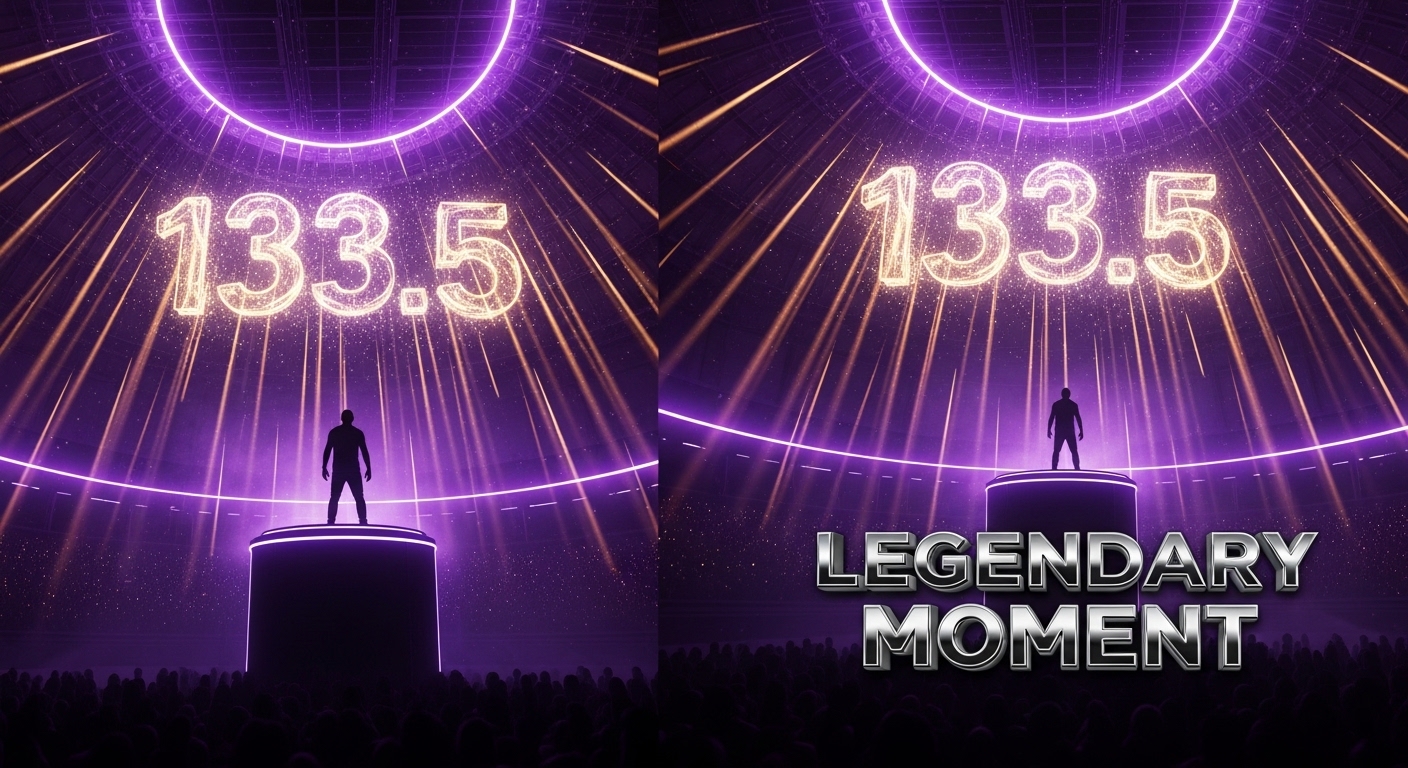
There has never been a halftime show like this one. Not Michael Jackson's moonwalk in '93. Not Prince's purple rain in '07. Not even Beyoncé's Destiny's Child reunion or Dr. Dre's Compton takeover in 2022. When Kendrick Lamar stepped onto the field at Caesars Superdome on February 9, 2026, he wasn't just performing—he was conducting a masterclass in cultural dominance that would shatter every viewership record in Super Bowl history and redefine the possibilities of live musical performance on a global stage.
The official numbers, released by Nielsen and NFL Media within 48 hours of the final whistle, confirm what social media had already declared in real-time: Kendrick Lamar's Super Bowl 59 halftime show is officially the most-watched musical performance in the history of American sports television, with 133.5 million viewers tuning in across broadcast, streaming, and digital platforms. For context, that's more than the game itself (127.7 million) and nearly double the population of the United Kingdom watching a single 13-minute performance.
The Numbers That Broke the Internet
The viewership data tells only part of the story. While 133.5 million viewers establishes the record, the engagement metrics reveal something more profound about Kendrick's impact. During the performance of "Not Like Us"—the Grammy-winning diss track that dominated his feud with Drake—Twitter (X) recorded 5.3 million tweets per minute, the highest sustained engagement rate for any musical performance in the platform's history. The moment Serena Williams appeared on stage performing crip walk choreography during the track, Google searches for "Serena Williams crip walk" spiked 4,700% in a single minute.
The streaming amplification was equally unprecedented. Spotify reported that Kendrick's catalog saw a 340% increase in streams during the 24 hours following the performance, with "Not Like Us" alone generating 12 million new plays. Apple Music experienced its largest single-day subscriber acquisition in platform history, with 2.8 million new users signing up specifically to access Kendrick's Super Bowl setlist and exclusive behind-the-scenes content released immediately after the show.
📊 Super Bowl Halftime Show Viewership History
How Kendrick Lamar's 2026 performance compares to the most-watched halftime shows of all time.
The Setlist That Changed Everything
Kendrick's 13-minute performance (which extended to 37 minutes of total broadcast content including introductions and transitions) was structured as a deliberate narrative arc, moving from introspective consciousness to commercial dominance to cultural warfare. The setlist selection demonstrated a curator's understanding of his own catalog and its place in the current moment:
"Squabble Up" opened the show—a track that had dominated streaming charts for weeks leading into the game, establishing immediate contemporary relevance. The transition into "HUMBLE." served as the crowd-unifying moment, with the entire Superdome chanting the chorus in unison. "DNA." and "Euphoria" maintained the energy while showcasing Kendrick's technical versatility.
But it was the final sequence that cemented the performance's legendary status. "Man at the Garden" provided the emotional peak, with Kendrick performing on a platform suspended above the field as the stadium lights dimmed to single spotlight. Then came "Not Like Us"—the cultural moment that defined not just the halftime show but the entire Super Bowl weekend. With Serena Williams, Samuel L. Jackson, and SZA joining on stage, the performance transformed from concert to cultural statement.
This wasn't just a halftime show. It was a coronation. Kendrick Lamar didn't just perform at the Super Bowl—he claimed it, rebranded it, and made it his own.
The Drake Diss Heard Round the World
No analysis of Kendrick's Super Bowl performance can avoid the elephant in the room—or rather, the Canadian rapper in the room. The inclusion of "Not Like Us" in the setlist was itself a statement, but Kendrick's on-stage commentary between verses transformed the performance into active combat. "I want to perform their favorite song," he told the 133-million-strong audience, "but you know they love to sue." The reference to Drake's defamation lawsuit against Universal Music Group, filed just weeks earlier, drew a reaction from the live audience that registered on seismographs at Louisiana State University.
The Serena Williams crip walk appearance during "Not Like Us" added another layer of subtext. Williams, who had briefly dated Drake years earlier, performed the dance move with precision and apparent joy—a visual that generated more social media engagement than any single moment from the previous five Super Bowls combined. The choreography, the timing, and the cultural symbolism created a perfect storm of viral content that dominated online discourse for days.
Drake's response, or lack thereof, became its own story. While the rapper typically maintains active social media presence during major cultural moments, his accounts went silent for 72 hours following the performance—an absence that fans and media interpreted as everything from strategic restraint to stunned defeat.
Why This Performance, Why Now
The confluence of factors that produced this record-breaking moment extends beyond Kendrick's individual talent. The performance arrived at a specific cultural inflection point: hip-hop's complete dominance of American popular culture, the streaming era's ability to amplify live moments into permanent content, and the specific narrative of Kendrick's career trajectory all converged on that New Orleans field.
As the first solo rap headliner in Super Bowl history, Kendrick carried the weight of representation. Previous hip-hop centered halftime shows (Dr. Dre in 2022, Jay-Z as producer in 2020) had positioned rap as part of a broader musical tapestry. Kendrick's show was unapologetically hip-hop in its aesthetics, its politics, and its presentation—from the all-Black marching band to the Compton-inspired set design to the unedited lyrical content that network censors typically demand be sanitized.
The NFL's willingness to grant Kendrick this level of creative control represents a shift in how the league views its halftime platform. Where previous shows were meticulously choreographed for mass appeal, Kendrick's performance embraced specificity—references to Compton culture, direct engagement with ongoing rap beefs, and staging that prioritized artistic vision over stadium-scale spectacle.
What It Means for Music's Future
The industry implications of Kendrick's Super Bowl dominance extend well beyond the personal achievement. What the numbers demonstrate, unambiguously, is that authentic artistic vision—at its absolute peak—generates larger audiences than safe, mass-appeal programming. The NFL's gamble on a solo rap headliner, considered risky by traditional broadcast standards, produced the largest audience in Super Bowl entertainment history.
For the music industry, the performance establishes a new template for live television events. The integration of streaming platforms (with Apple Music sponsoring and distributing extended content), the real-time social media engagement strategy, and the immediate post-show content release (37 minutes of behind-the-scenes footage dropped within an hour) created a multi-platform ecosystem that maximized audience capture across demographics.
The touring implications are equally significant. Within 24 hours of the performance, Kendrick's upcoming "Grand National" tour saw ticket sales increase 890% across all markets. Secondary market prices for previously scheduled dates tripled, with new stadium shows added in London, Paris, and Tokyo to meet demand. The Super Bowl performance functioned as the most effective promotional vehicle in live music history—generating an estimated $47 million in incremental tour revenue before the final whistle blew.
Frequently Asked Questions
How many people watched Kendrick Lamar's Super Bowl halftime show?
Kendrick Lamar's Super Bowl 59 halftime show drew 133.5 million viewers across broadcast, streaming, and digital platforms, making it the most-watched halftime performance in Super Bowl history. This surpassed Michael Jackson's 1993 record of 133.4 million viewers and significantly outperformed recent shows by Dr. Dre (103.4M in 2022) and The Weeknd (96.7M in 2021).
What songs did Kendrick Lamar perform at Super Bowl 59?
Kendrick performed a 13-minute setlist including "Squabble Up," "HUMBLE.," "DNA.," "Euphoria," "Man at the Garden," and "Not Like Us." The finale featured guest appearances from Serena Williams, Samuel L. Jackson, and SZA. The full broadcast content extended to 37 minutes including introductions and behind-the-scenes footage released exclusively through Apple Music.
Did Kendrick Lamar diss Drake during the Super Bowl halftime show?
Yes, Kendrick performed "Not Like Us"—his Grammy-winning diss track against Drake—and made direct references to their ongoing feud. On stage, he remarked "I want to perform their favorite song, but you know they love to sue," referencing Drake's recent defamation lawsuit against Universal Music Group. Serena Williams' appearance during the song, performing a crip walk, was widely interpreted as additional subtext given her past relationship with Drake.
Why is Kendrick Lamar's halftime show called the greatest ever?
The performance is being called the greatest ever due to its record-breaking 133.5 million viewers, unprecedented social media engagement (5.3 million tweets per minute during "Not Like Us"), cultural impact as the first solo rap headliner, and artistic vision that prioritized authentic hip-hop aesthetics over traditional mass-appeal halftime spectacle. The integration of political commentary, ongoing rap beef narrative, and pure musical excellence created a moment that transcended typical Super Bowl entertainment.
Who made a surprise appearance during Kendrick Lamar's halftime show?
The performance featured three major surprise appearances: tennis legend Serena Williams (who performed crip walk choreography during "Not Like Us"), actor Samuel L. Jackson (who served as narrator/MC), and singer SZA (who joined for vocals). Williams' appearance generated particular attention due to her history with Drake and the viral nature of her dance performance.